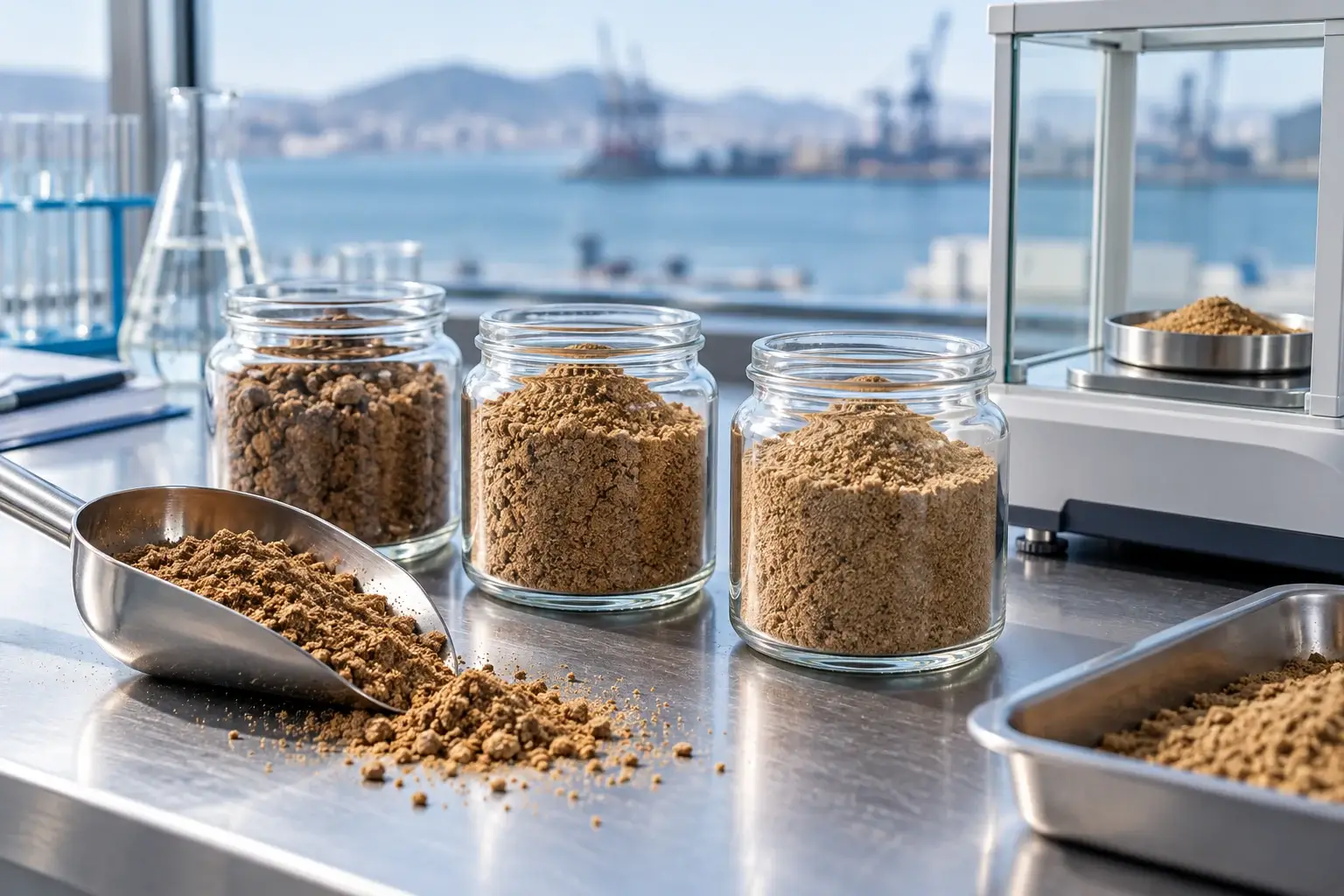






















Does darker fishmeal prove excessive heating? Does a strong fish smell prove freshness? Are finer particles automatically better for a formulation? These are common receiving questions. Sensory observations can flag changes, but colour, smell and feel cannot reliably establish a numerical analytical result.
Use observations for the right purpose
Sensory checks help document appearance, packaging and sample condition, identify departures from an agreed sample and decide whether further verification is needed. They do not establish every nutritional, safety or formulation requirement.
Write the observation rather than a premature conclusion: darker than the retained sample or visible clumps is more useful than low protein or superior quality. A factual observation leads to a question; an unsupported conclusion can bypass evidence.
Make comparison conditions consistent
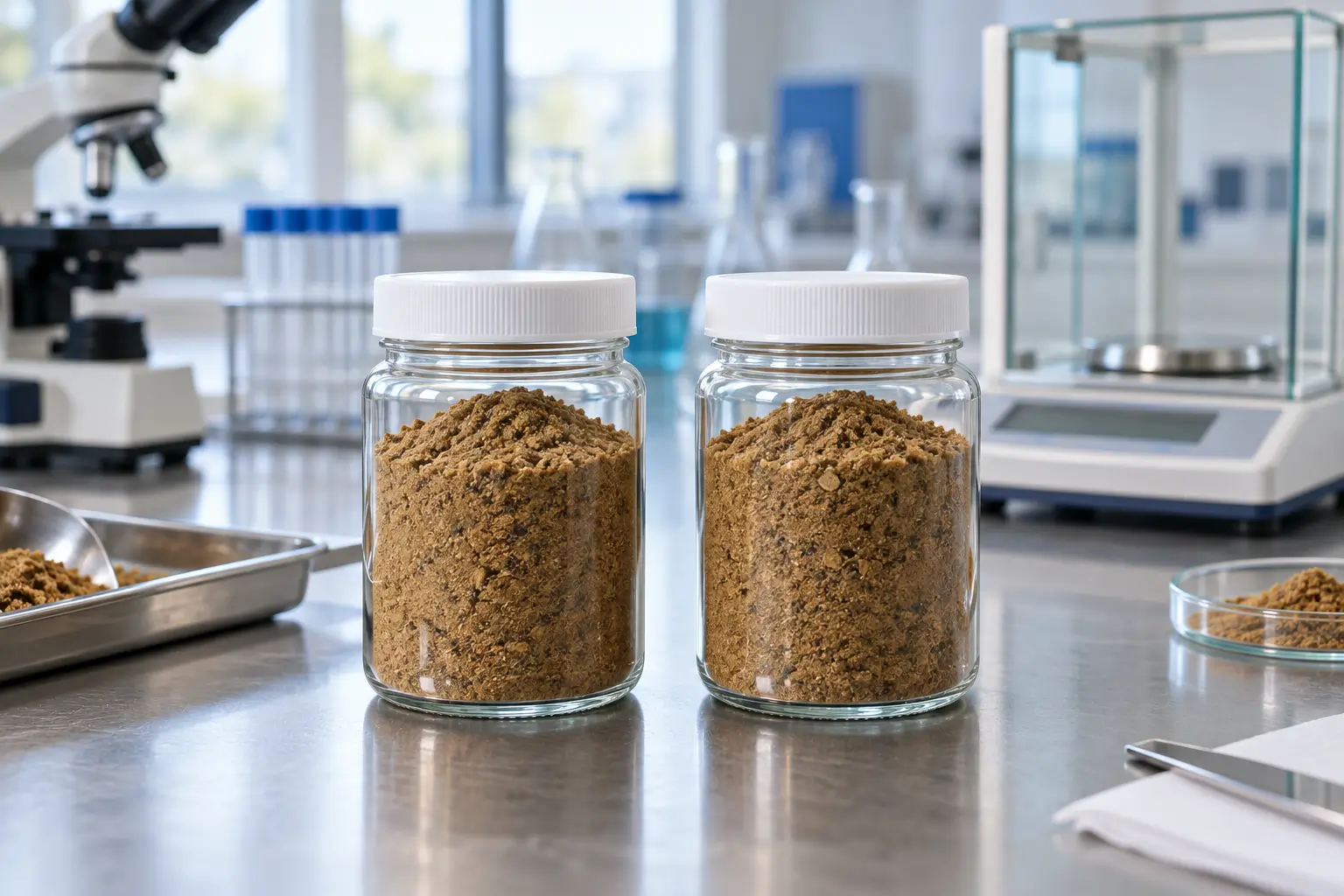
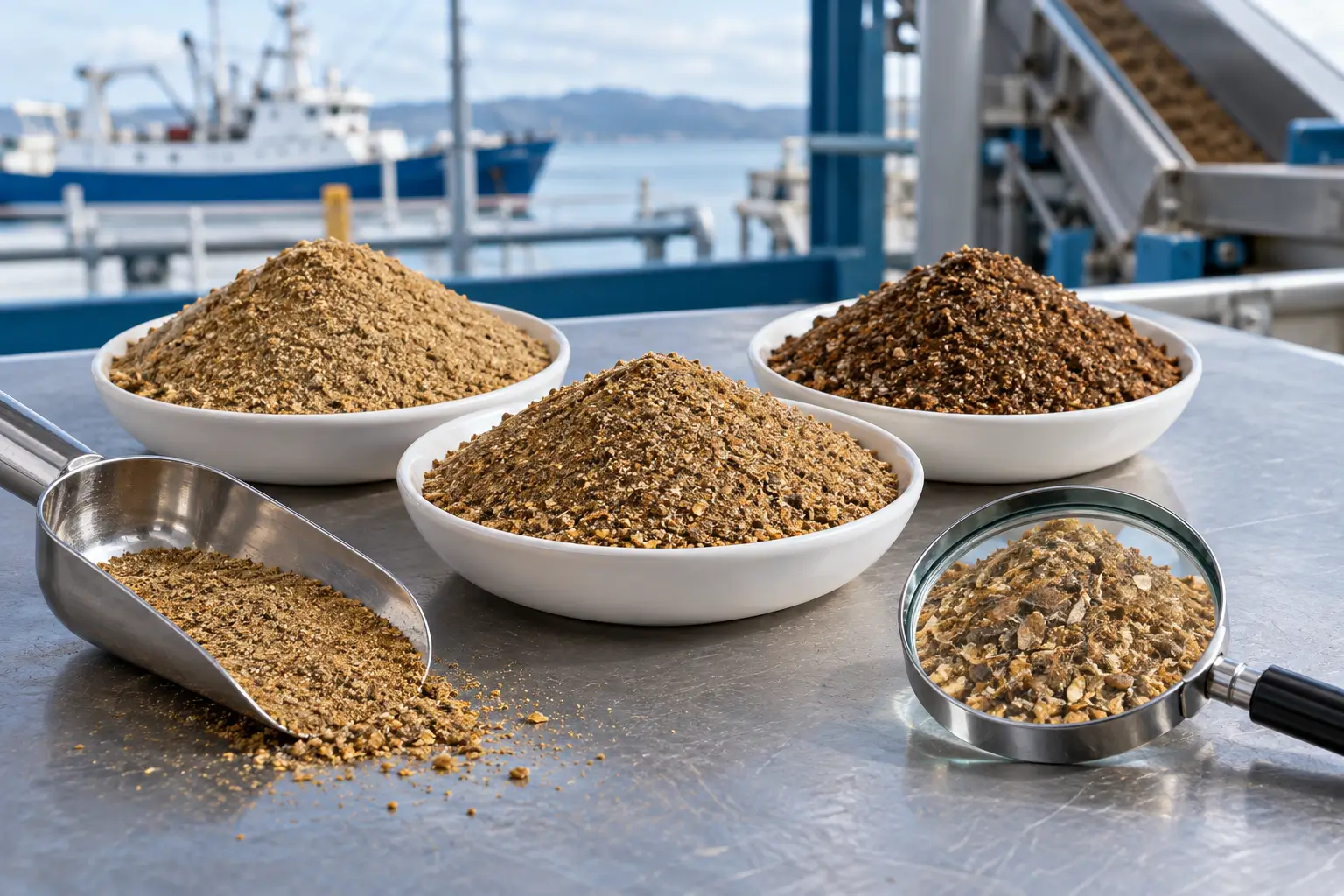
Use comparable lighting, containers and sample condition, and confirm that the samples belong to the same product category. Camera white balance, light colour and screen display can change how a photograph appears. Photos assist communication, but should not alone establish a precise colour difference.
Interpret raw-material and processing differences through product records. FAO's discussion of fishmeal products highlights raw-material condition and process control. This supports combined verification, not a method for accepting or rejecting a batch from a photograph. Product quality background
Recognise limits for odour and texture
A stronger fish smell should not automatically be interpreted as better freshness, nor a weaker smell as lower protein. Record unusual odours for appropriate review without requiring direct contact with, or close inhalation of, suspect material.
Particle and clumping observations may raise questions about processing or condition. Suitability for subsequent use still depends on the intended process and agreed specification. Different ingredient forms should not be ranked under one visual standard.
Turn observations into verification questions
- Record product, lot, packaging and observation time.
- Check comparable conditions and sample category.
- Identify the actual change and keep clear photographs.
- Request the relevant explanation or batch documentation.
- Decide whether sampling, isolation or testing is needed under the procedure.
Keep observation separate from analysis
Purchasing staff can discuss findings with quality personnel and the supplier before deciding on action. Normal appearance does not prove that every parameter is acceptable. Haili can discuss actual product form and batch information. Keep sensory records and analytical evidence distinct.