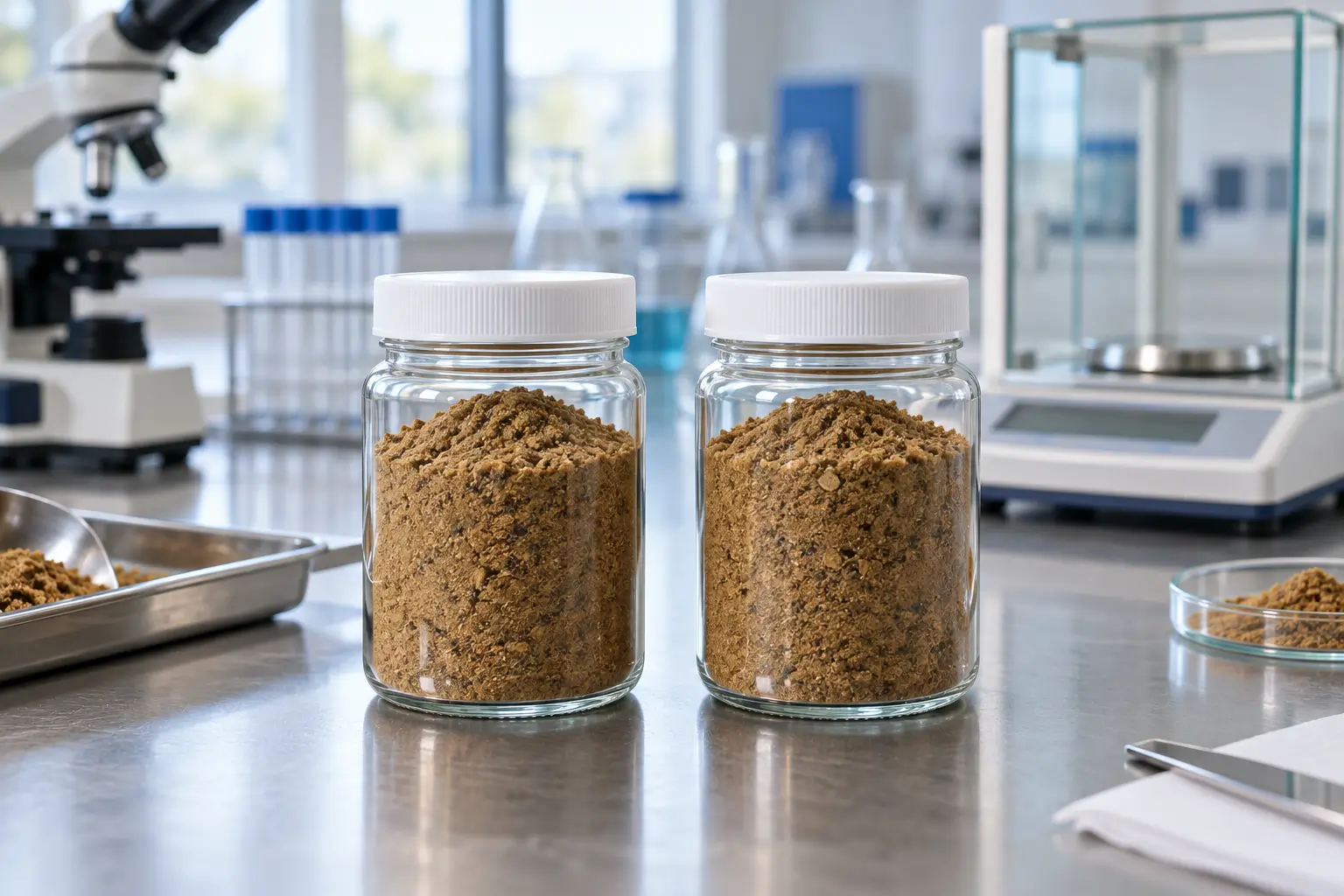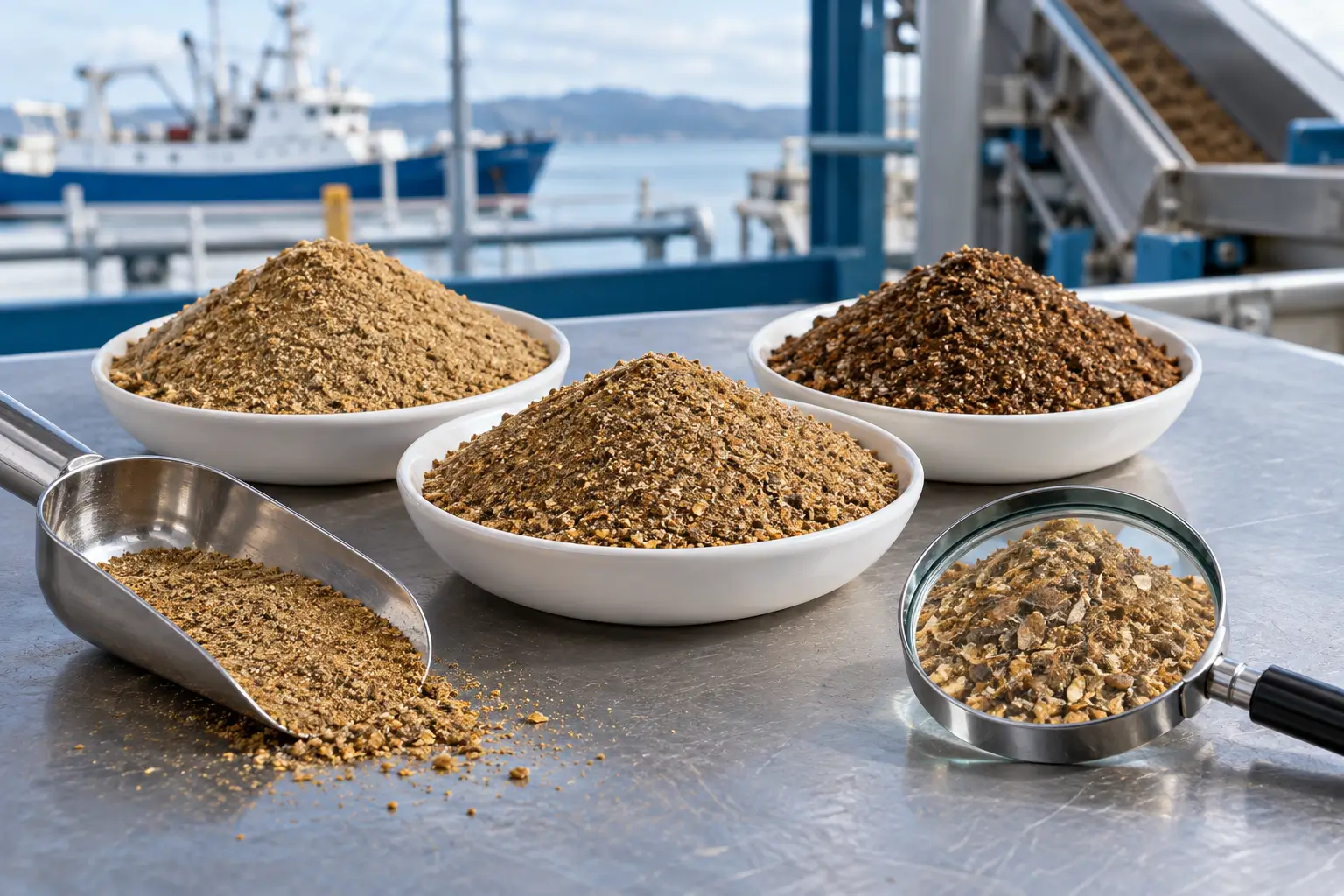






















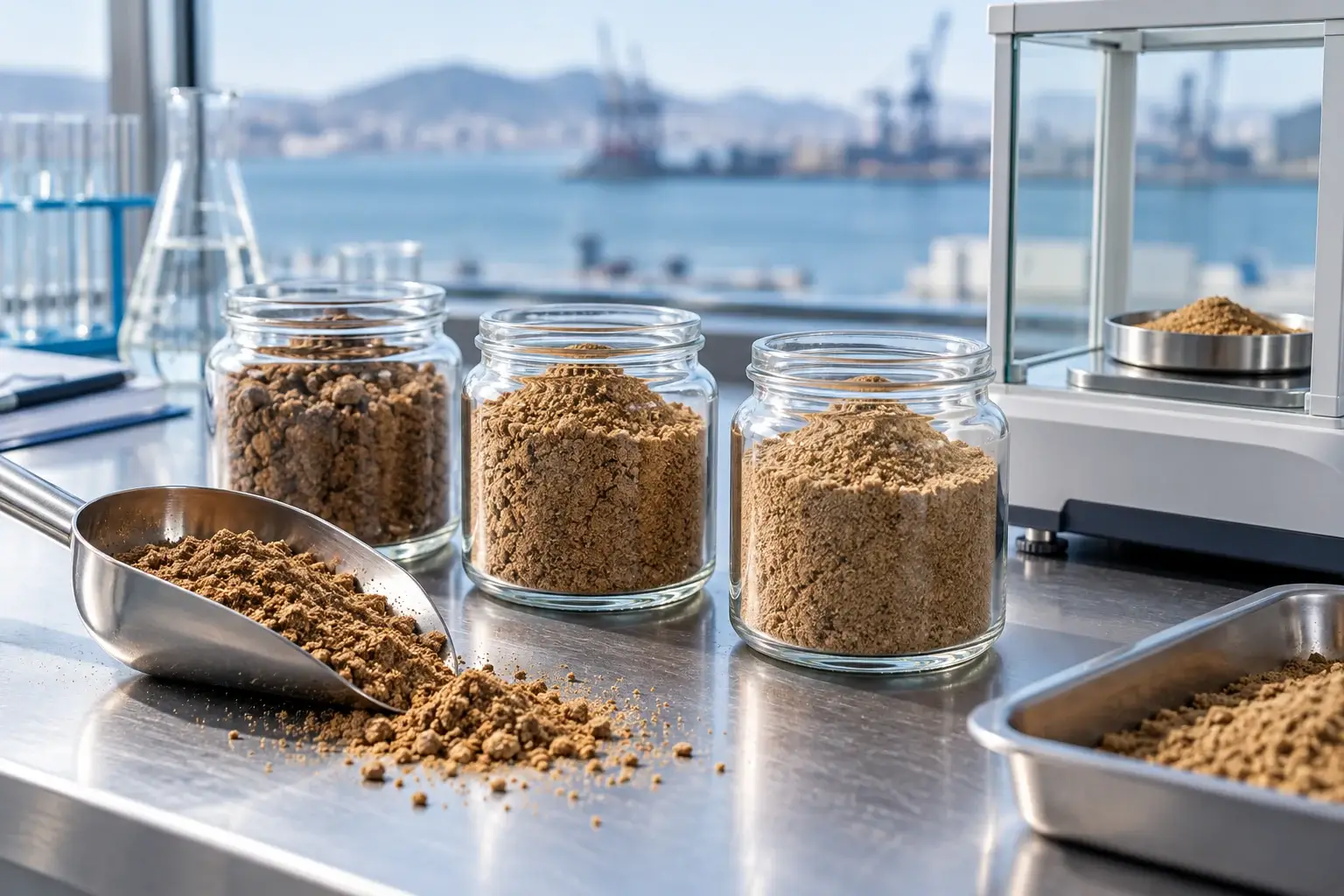
Crude protein is often the first figure compared when purchasing fishmeal. Yet the same protein level does not mean the same origin, processing history or performance in a formulation. Start with the intended application, then consider composition, quality and batch information together.
Make comparisons on the same basis
Before requesting a quotation, prepare a short brief: the feed application, the parameters you need to control, expected volume and delivery destination. Compare results using consistent units and reporting bases. As-received and dry-matter results, for example, should not be mixed directly. The sample description, batch number, test date and method should also correspond to the product being offered.
Protein quantity is only part of the picture
Crude protein is an important composition parameter, but it does not independently establish the nutritional value of the protein. For a more detailed assessment, discuss amino acid composition and information on digestibility or utilisation with the supplier. Formulation specialists can then assess suitability. A high protein figure should not replace checks on origin, processing and overall quality.
Read moisture, ash and fat together
Moisture is relevant to preservation and purchasing comparisons. Ash represents the total inorganic residue and should be considered alongside calcium, phosphorus and formulation objectives; lower is not automatically better for every purpose. Crude fat describes the lipid component and also points to the importance of storage and oxidative condition. Read these results together rather than optimising one figure in isolation.
Assess freshness indicators in context
Terms such as TVN or TVB-N may appear in fishmeal documentation, alongside histamine. These provide different information from crude protein. Confirm the exact parameter, sample type, units and method before comparing reports. Evaluate the results against applicable requirements and agreed specifications rather than combining unrelated numbers. Sensory inspection can reveal warning signs but does not replace testing.
Link a report to its batch
A historical report describes its corresponding sample; it does not automatically represent every later delivery. File general product information separately from batch test documents, and connect purchase orders, batch identifiers, samples and receiving records. Over a continuing supply relationship, tracking changes in key parameters can help identify departures from previous deliveries.
Purchasing checklist
- Specify the application, parameters, limits and units.
- Confirm origin, producer, grade and batch identity.
- Match reports to the batch, test date and methods.
- Agree on sampling, retained samples, retesting and handling discrepancies.
- Consider price, availability and delivery conditions together.
Haili offers imported and domestic fishmeal. Including the intended use and parameter requirements in your enquiry helps us discuss suitable products and documents.