





















Names such as steam-dried fishmeal or super steam-dried fishmeal combine different kinds of information. Some words describe processing; others identify a supplier's commercial grade. Neither replaces measurable batch evidence. A product name helps organise a discussion, but does not complete acceptance checks.
What a process description tells you
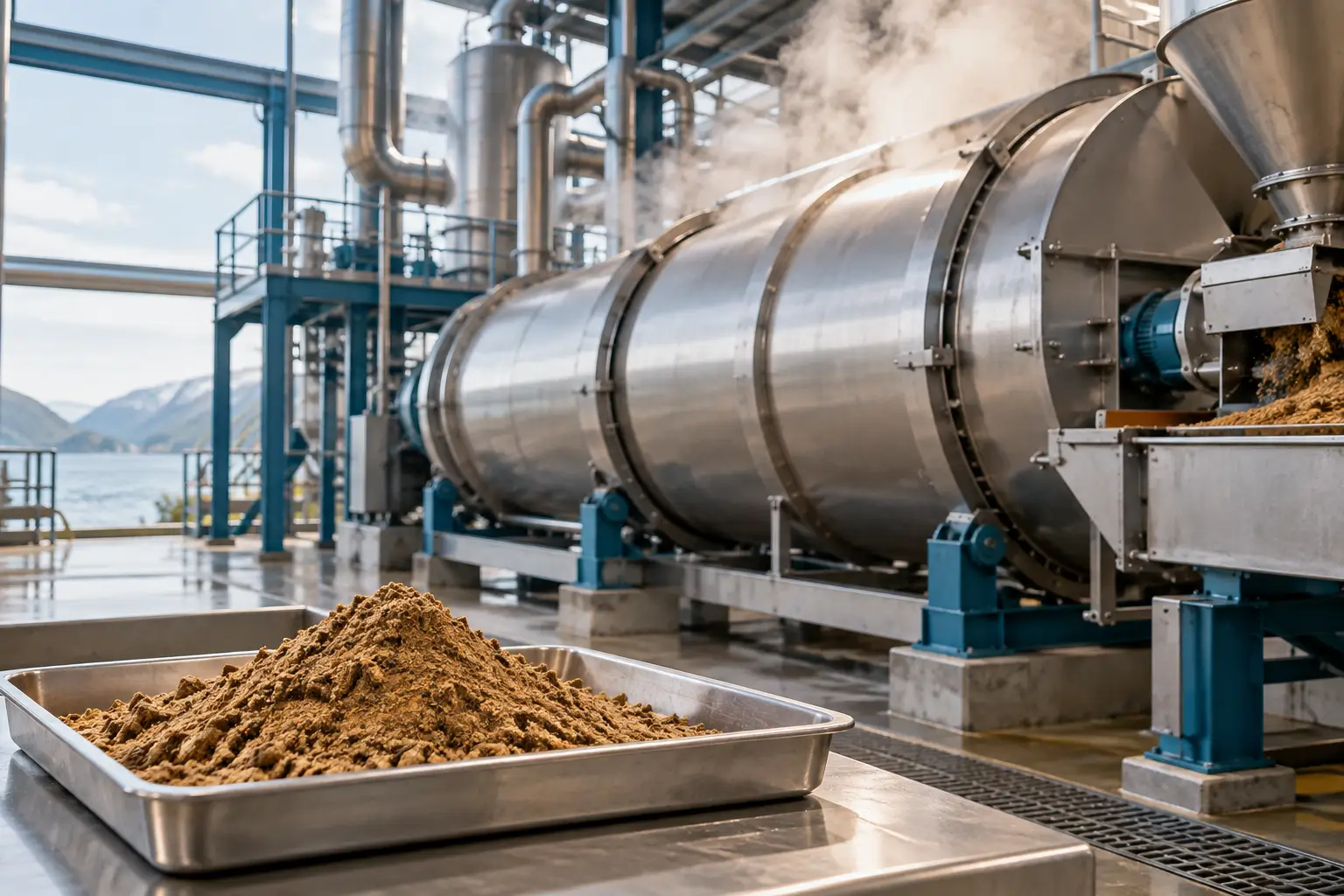
FAO describes common fishmeal manufacture through cooking, pressing, drying and grinding, and distinguishes direct hot-air drying from indirect steam drying. Processing control matters, so products described with the word steam should not automatically be treated as identical. Processing background
Ask how the offered product is made, how the name corresponds to the producer's documents and whether different lines or specifications are involved. A process description is not evidence that every parameter of an individual lot has passed inspection.
Read grade names against the product definition
Terms such as super or premium must be interpreted through the producer's designation and the agreed specification. Similar translations across brands do not establish equivalent grades. Do not infer guaranteed protein, freshness or other numerical values from a label alone.
Record the original designation, the translated purchasing name, the producer and the specification version together. If an abbreviation or bag description changes, confirm product identity before simply replacing a line in the quotation sheet.
Request three separate information sets
- Product description: process, raw-material origin and commercial grade.
- Routine specification: relevant parameters, reporting units and application notes.
- Offered batch: records tied to the actual lot, timing and supply proposal.
If only routine specifications are available, mark the batch as pending confirmation. A typical value in a brochure should not silently become a guarantee for every delivery.
Use processing information in the evaluation
Read process information together with raw-material details, analytical evidence and application evaluation. Formulation and quality staff should decide whether a proposed change requires sample assessment; similar names alone are not a sound reason to substitute ingredients.
Avoid inferring the process from colour, or treating a process name as proof of all nutritional and safety requirements. Specific questions about an identified product are more useful than repeatedly asking whether it is a high-grade material.
Confirm the ordering record
Before ordering, document the complete product designation, producer, agreed specification, available batch and document delivery timing. Haili can discuss these points for actual supply options. Grade interpretation and delivery requirements should follow the corresponding product records and the parties' agreement.