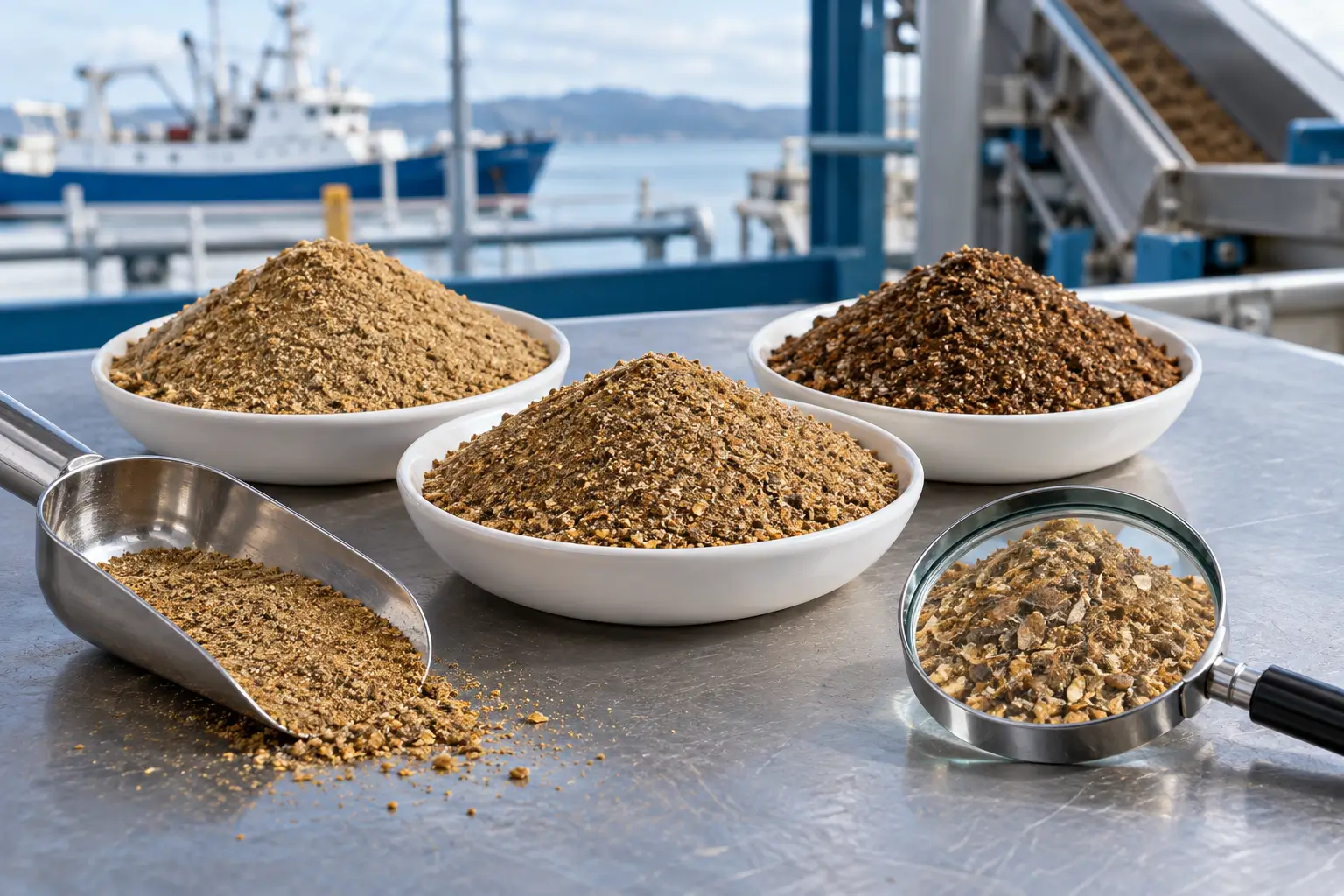






















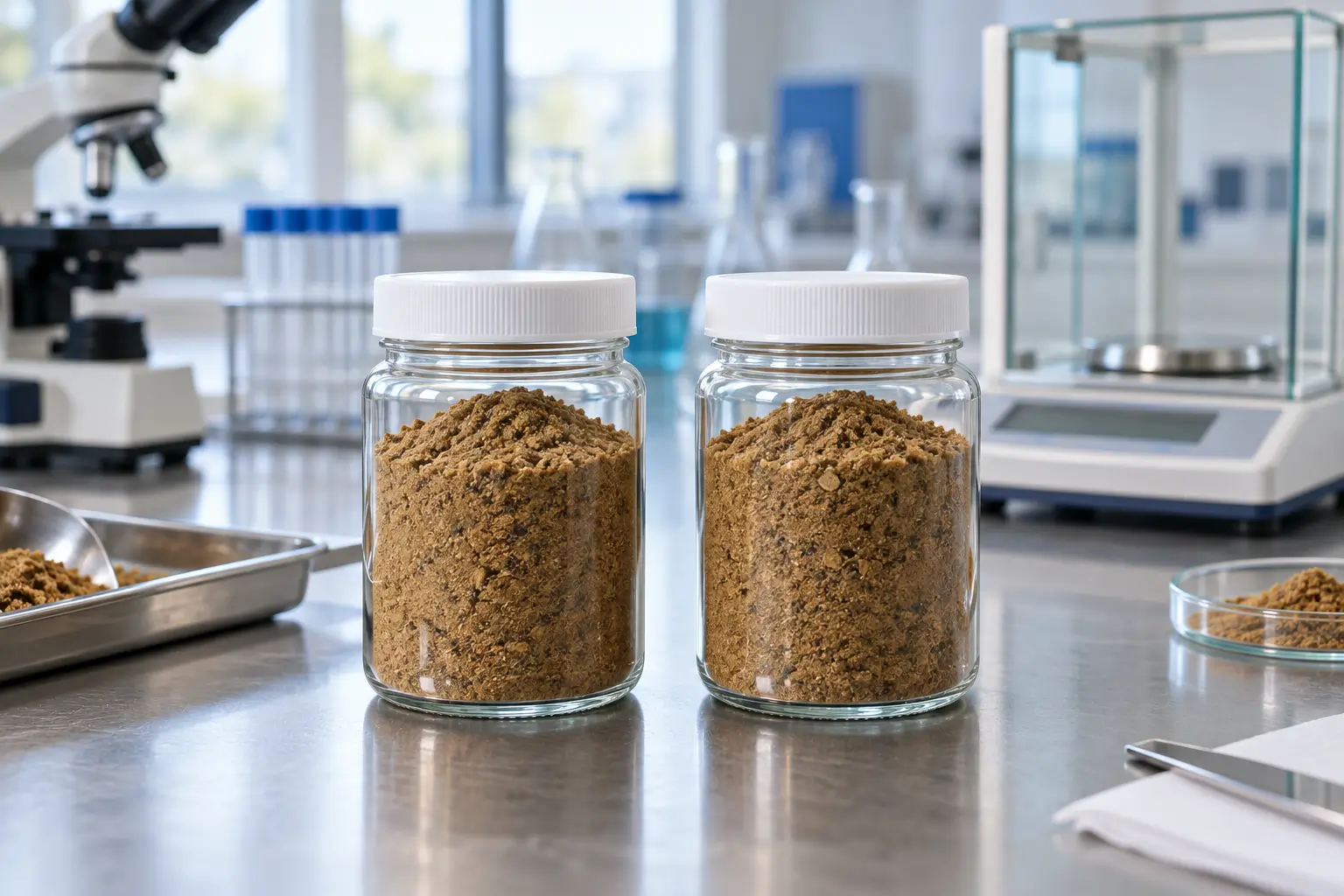
When two fishmeal reports differ, it is tempting to ask immediately which laboratory is more accurate. A more useful sequence is to check samples and methods, then request an explanation. Different numbers do not automatically prove an error, acceptance or rejection.
Establish material identity
Compare lot numbers, sampling dates, samplers, sample identifiers, transport and seal records. Two samples from one shipment may differ in collection position, mixing or reduction. Matching lot numbers alone do not establish identical test material.
If one portion was retained before testing and another was collected after opening or use, also review storage and changes in condition. Document that history before deciding the next step.
Align the analytical description
The word protein on both reports does not establish equivalent analysis, conversion or reporting. Ask for the precise parameter, method version, sample preparation, unit and reporting basis. Identify as-received versus dry-matter reporting before subtracting one result from another. Reporting basis
Purchasers should not apply an internet formula to correct every discrepancy. Ask the laboratories whether the methods and results are comparable.
Separate measurement from acceptance
Results near an agreed limit require the parties' previously agreed decision rules. Measurement uncertainty can be relevant to interpreting a result; ILAC guidance discusses its evaluation and reporting. It is not a general allowance for dismissing unfavourable findings. Measurement uncertainty
Do not subtract an uncertainty figure yourself to declare acceptance, or attribute every difference to uncertainty. Ask the laboratory to explain its relevance, then follow the agreed process.
Agree the retesting plan
- Identify the parameter and the precise disagreement.
- Confirm sample, seals, sampling and dispatch responsibilities.
- Agree the laboratory and analytical method.
- Confirm cost, timing and interpretation arrangements.
- Define identification, isolation and use status while results are pending.
Keep one batch file
Store original reports, clarifications, retesting agreements and the final resolution together. This article proposes a communication sequence; it does not replace laboratory interpretation, contractual terms or applicable requirements. Haili can help check actual batch information and available records. Conclusions should follow verifiable evidence.