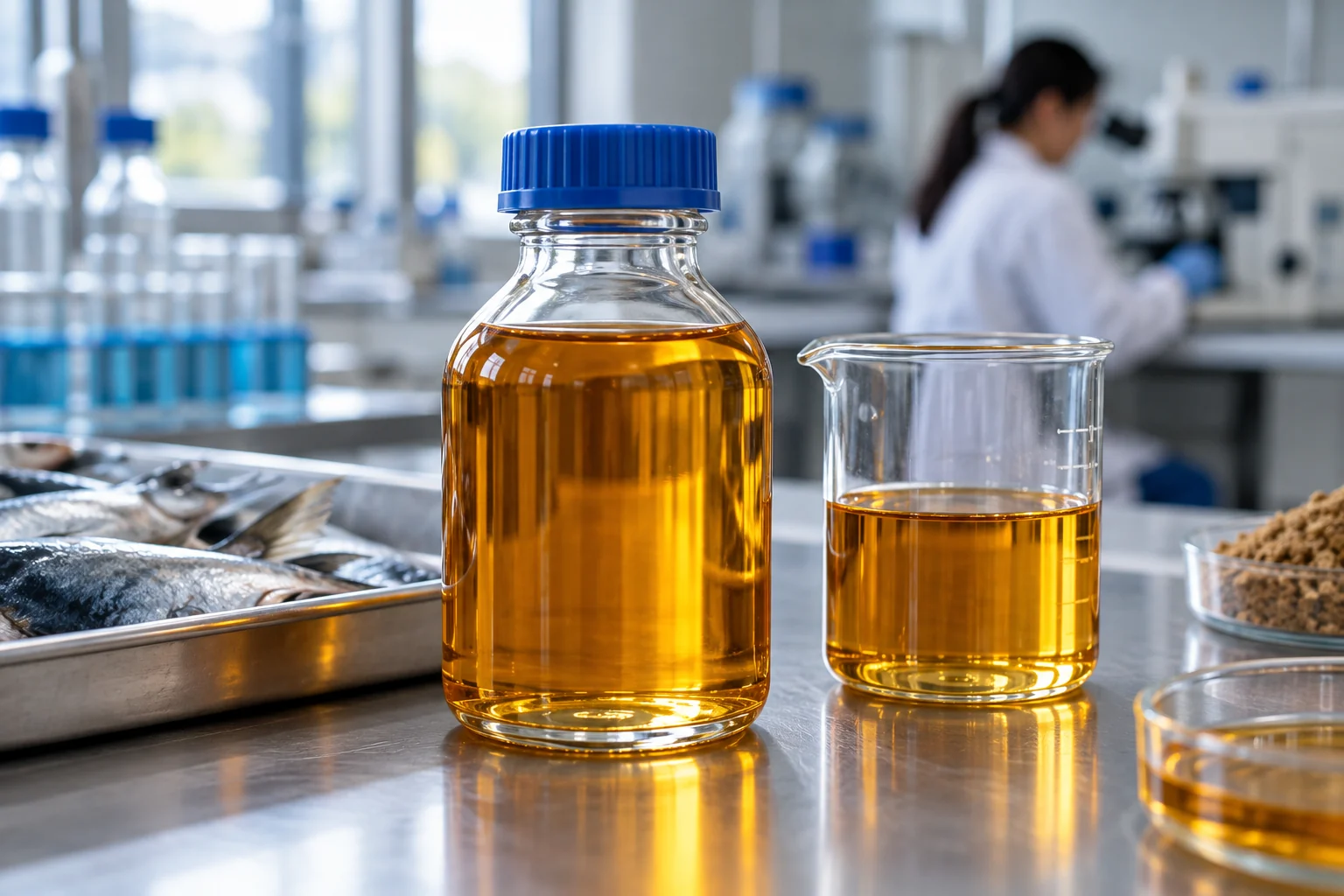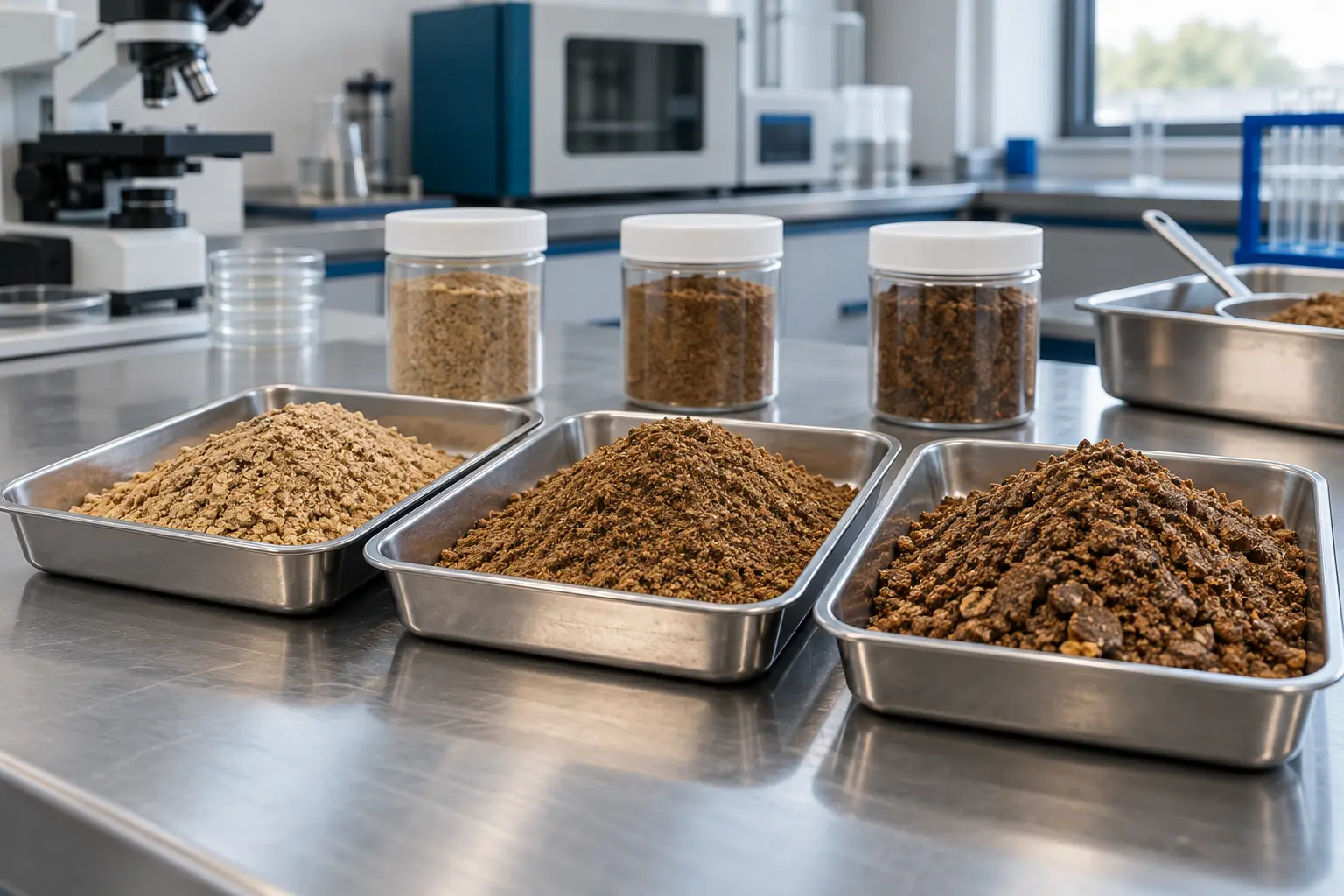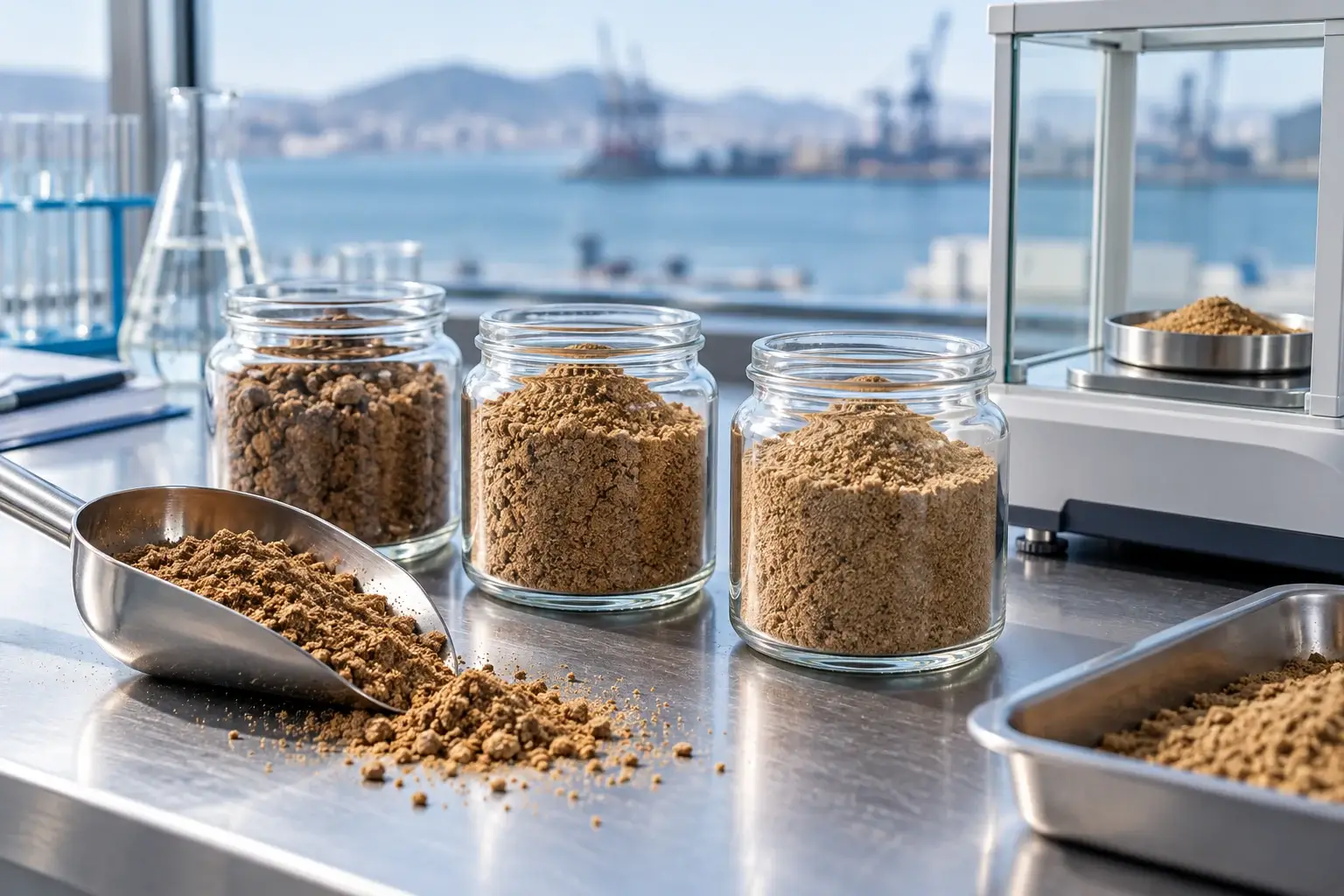






















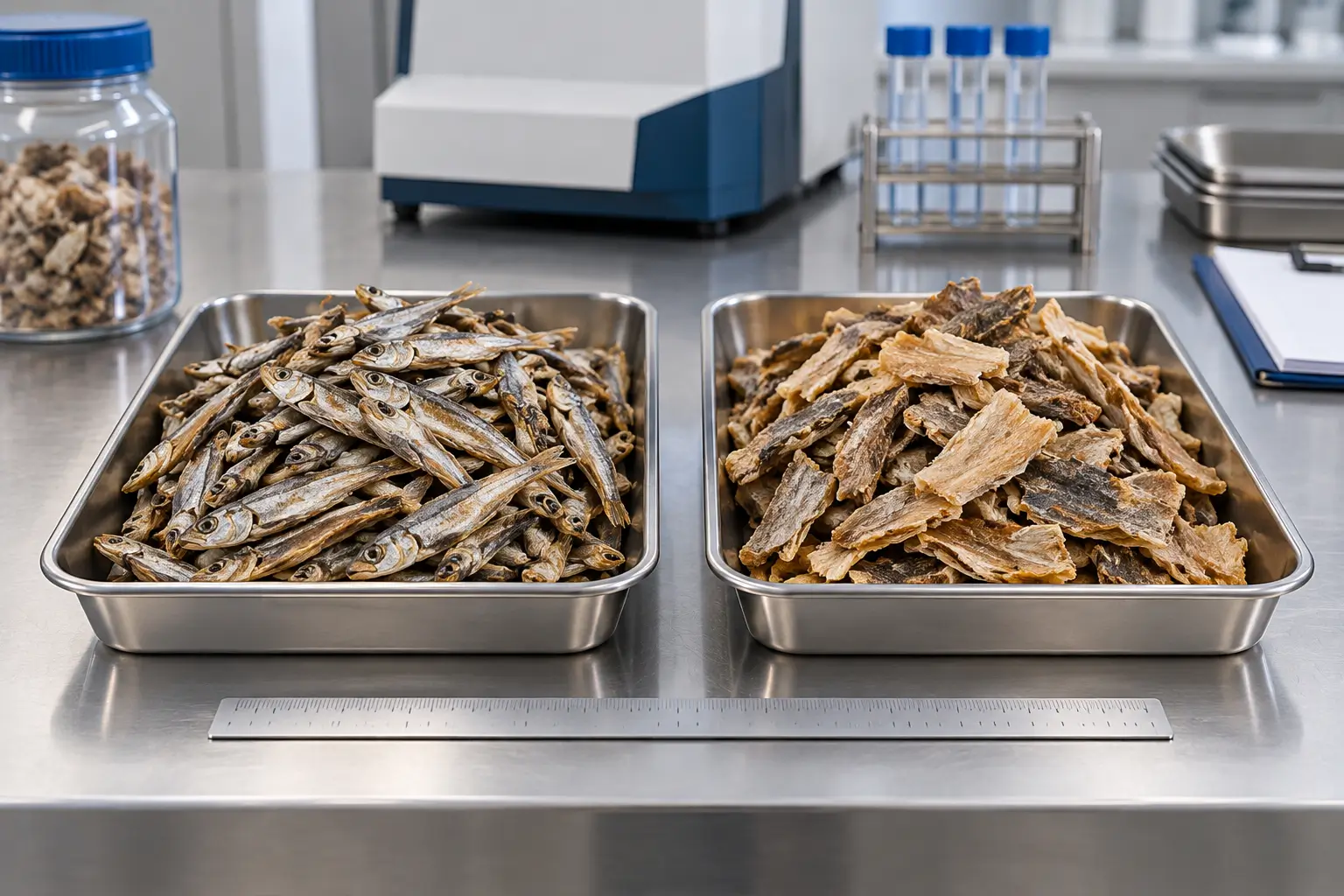
Dried fish ingredients describes a broad physical form, not a complete specification. Origins, raw-material composition, drying and sorting can result in different appearances, sizes and processing needs. Explain the feed ingredient requirement rather than sending a reference photograph alone.
Establish identity and intended use
Clarify the species or verifiable raw-material scope, origin, producer or processor, and whether the material consists of whole fish, pieces or another form. Appearance alone is not a reliable way to establish species or origin when records are missing.
State the intended aquafeed application, any subsequent grinding or processing, and who will assess compatibility. Recognisable fish form does not by itself establish suitability for a particular formulation.
Make the physical description usable at receiving
Agree how size range, whole-fish or piece condition, fines and packaging will be described. Photographs help when they include scale, shooting conditions and product identity. Otherwise, samples photographed at different distances can be mistaken for equal sizes.
Production staff should explain any screening, dosing or feeding-equipment requirements before purchasing requests a specification. More uniform appearance is not automatically the best choice for every process.
Do not let dry appearance replace evidence
A dry-looking surface does not confirm moisture or suitable storage conditions. Discuss relevant analysis, packaging, storage instructions and receiving checks for the actual product and application. FAO storage guidance provides background on the importance of storage management; it does not establish a universal shelf life for dried fish ingredients. Storage background
Likewise, fish aroma alone does not prove an animal intake response. Visual inspection is not a complete verification of foreign matter or safety parameters.
Prepare the enquiry information
- Identity: origin, described fish scope and product name.
- Form: whole fish or pieces, size description, fines and packaging.
- Application: feed use, subsequent processing and internal assessment needs.
- Evidence: quality parameters, batch records and storage instructions.
- Delivery: quantity, destination, receiving checks and exception contacts.
Use a batch-linked sample where needed
Discuss unclear requirements through a sample connected to an actual supply option. Haili can discuss available dried fish ingredient forms, documents and delivery arrangements. Product scope and specification depend on actual supply and agreement; no universal inclusion advice is provided independently of formulation assessment.